Sunday, July 28, 2013

Patience: How to Return to Running after an Injury

After knee injuries that came about with my training back in the spring, I have taken a bit of a vacation from running. Coming back has been extremely slow and well- measured. I am not the same runner that I was in high school or in college, my body has taken on most likely thousands of miles, and it's telling me to return with extreme caution. Remembering this and actually practicing this approach however, has not been easy, at all. I want to run straight out of the gate most of the time. To rein things in, I've forced myself to remember a few key things to keep positive, injury-free, and successful. All of these things stem from one thing only, patience.

Here are a couple of ways to confidently return to the sport you love with a healthy, patient approach:

- Ditch the watch. When you run with a watch, you're automatically setting expectations. Will I hit the one mile mark at 7:45? Can I do this three- miler in 22 minutes? Unless you are doing a timed workout or want to run for say, 40 minutes, using a watch for the sake of timing yourself is not a good idea. Without it, I feel that I can breath easy, run at different paces based on how I feel, and run with little stress. Be forgiving of your return by running based on feeling. 

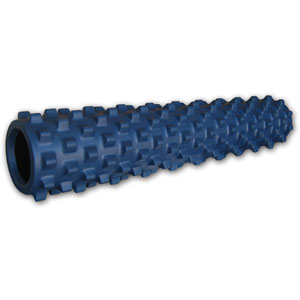
Listen to your body. When returning from an injury your body is in a fragile state, it's important to do a "check-in". To go about this, I usually do a thorough stretch before I head out for my run. What's feeling tight? What's a little ache-y? Spend a little more time on the area that needs it. If you can roll it out before, that will help get the blood flowing. Lately I've been using this puppy, the rumble roller. Then, when you're on your run, start out at a very slow pace so you have time to "sink" into your run. Once everything feels good, you have the liberty to amp up the pace.

Keep a log. When you write all the details down, like how you felt, what was difficult, what your favorite part was, you are keeping a history and study of your own running. You are your own experiment. A running log is also a great way to see how you answer changes within your running, whether you are fiddling with the mileage or intensity. Once you've got it all figured out, the next move is to keep consistent.  

- Take baby steps. Returning from an injury can be like starting from scratch, depending on how long you have been out. Slowly increasing the workload is key. This ties into the keeping a log. It's good to increase your mileage by small percentages (I recommend 5% a week), find out where you respond best (without pain), and keep with it. And, if you are hitting the track for a workout, start with an easy workout that is flexible. For example, 6x 400m, 2 minutes rest, 80 second laps. You can take away two reps, one rep, or increase your rest. Make it fluid.

- Set practical expectations. If you rush towards lofty goals, you will only be disappointed. Write out them out, make sure they are realistic, attainable, yet challenging. You may not be same sprite runner you once were in college, but perhaps now you have more time to train, as opposed to the three month period of a track season.

- Seek a second opinion. Consult your coach, doctor, or physical therapist so you're not doing the work alone. Having someone to check- in with along the way will give you confidence and security. When I was getting back to running after surgery, my physical therapist was a great resource. She told me the clear can- dos and cannots. And we were both able to rejoice when I made a huge step in recovery. Find your knowledgeable fan. 

I hope you find these helpful! Please feel free to comment below, I'd love to hear from you. 

-Meggie


Monday, June 17, 2013

Writing for Runner's World

I recently had the opportunity to write for the wonderful running publication, Runner's World. I've been an avid reader since the age of ten, it's been very cool watching the magazine evolve over time. I hope you enjoy this story as much as I enjoyed writing it...


http://www.runnersworld.com/runners-stories/the-greatest-gift-of-all


Wednesday, May 22, 2013

The First Run

It's been a bit over a month since I went on a run. Due to a partial tear in my right knee, I opted for PRP injections, a fairly new alternative method to surgery (that requires its own post).  I had the opportunity to test out the results this evening. So far, so good. No pain.

Yet, there was the unavoidable pain of the First Run that I met. I choose to write First Run as a proper noun because it's a holy initiation of sorts, I'm happy just to survive it. We've all experienced it. You set out on the road and in ten minutes it's as if a bear grabbed onto your shoulders, your breathing pattern turned to sound like that of cat heaving a hairball, and you don't give a damn that people passing by  stare at how disfigured your face looks.

My choice of a First Run was a two miler, to Ocean Avenue and back. I returned home defeated, yet simultaneously elated. Initiation was over.

I have a few tips to share so you can get past your own First Run without feeling 30 years old your senior.

1. Choose a reasonable distance.

My rule is to do a quarter of what you run on a daily basis when training at top shape. For example, if you're highest weekly mileage is 70 miles, you average 10 miles a day. Take a quarter of that 10 miles, and you have a 2.5 miler of a First Run. You'll most likely be comfortable yet still challenged with this distance.

2. Start slow.

Why burst out the gate like a madman? Take it easy. If you're with a friend, you should be able to talk here and there. If you're by yourself, your breath shouldn't be overwhelmingly audible. Again, challenge yourself, but don't overdo it.

3. Warm up before you go.

Do a set of jumping jacks, or take your bike around the block. If the blood is flowing beforehand, your run will be flowing just as well.

4. Don't listen to music.

If you're like me, you get revved up by music too easily. "Thriller" will only make your run harder in the end. So, be in tune with what you hear, your breath, your foot strike. It should all be mellifluous.

5. Lastly, don't set high expectations.

Your First Run is open to a lot of flaws and kinks. It's like putting oil on a squeaky bike. It takes a few revolutions to smooth things out.

- Keep Runnin' Child


Tuesday, January 15, 2013

The Deskbound Workout

I recently read in the New York Times Well Blog the answer to relieving the deskbound job from the static, stale, and total exasperation of sitting all... day... long.  While they suggested a twenty second movement cycle, stand up work stations, and office ergonomic stations, I have a few more to add.

1. Roll your Ankles, Calf Raises

You can do this as much as you want. Roll your ankles clockwise and counterclockwise for a minute, or bring your toes out and back towards your leg. Do this while you you finish writing your paragraph, while you're on the phone, or as you read this article. You'll notice after about a minute of rotations your lower calf muscles will start to wake up. Now just try setting your feet down and bringing your heels up, toes down. Do 100 lifts. It's a wonderful way to work all those intricate tiny muscles that connect your feet to your lower leg muscles.

2. The Stairs

Each hour take a step away from the desk and go up two flights of stairs. Come back down, catch your breath and recoup. This is a great way to reset your self at the desk, breathe, and feel like you had a bit of cardio added to your day. If you're adventurous enough, do lunges in the hallway.

3. The Shoulderblade Touch

Sit at edge of your chair. Tuck your tailbone, sit tall, and clench your abs and take your shoulder blades as far back as you can almost to touch. Do this about ten times on each hour. It will feel as if you are trying "fly" while seated. That's good. You want to open up your chest and remember that tall posture is the best posture.

4. Squeeze your Butt

You heard me. Your gluts are completely atrophied as you sit, wake them up!! Hold for five seconds and release. Do this twenty times. No one is watching. 

5. Lunchtime Stroll/Workout

Forget lunch at Panda Express and grab some friends for a walk. You can eat at your desk. Take that hour to actually go for a brisk walk, take in the sun, or even hit the gym. Take full advantage of the hour. Anything is better than nothing at all. You will come back to your desk feeling rejuvenated and perhaps even sore! 

6. Stretch Your Hip Flexors

Every time you sit down your hip flexors are shortened. Think of them as being curled into an "L" instead of their natural "I" standing position. Oof right? Try this.  In your chair, kneel as if you were lunging statically. Put one leg back, skooch your butt half off the chair and bring your other leg forward. Feel a stretch yet? Your quad should be stretching and engaged. Now, lean back to the opposite side of the leg that is behind you. That's your hip flexor thanking you. It may look weird but you won't walk out at 5PM feeling all stuffy inside.


Promise.
Meggie


Thursday, January 10, 2013

Motivation for Miles


It's 6pm, the sun has already set, bringing the sky to a velvet dark navy. It's so cold your snot rocket could crystallize in the air. Your legs are still feeling the lactic acid from yesterday's workout. Dinner and a movie is on the mind. Today's run can wait. You'll be back tomorrow. Who's counting today anyhow?

We've all been there. I especially had this happen to me last night. The guilt -o-meter went to a new high, as I decided to visit a Mexican food truck and the local bar for a dark' n' stormy. The gym could wait. We all deserve a get out of jail free card right?

Yes (because that burrito. ..was... delicious). And no.  I will be back today in a vengeance for that lost run.

Most of all,  I challenge you to go for a run on the day you feel least like running. I bet you, you will return home feeling a sense of accomplishment...in two fold.

Just try it. Let me know how it goes.


Till then, when you feel like you're having "one of those days" and can't step a foot out that door, take a look at the collage I've prepared for you below. It's got movin'ation for miles...


ESSENTIALLY WHAT YOU'LL LOOK LIKE IN A FEW MONTHS HAVING FOLLOWED THESE WORDS.
-Meggie


Tuesday, January 8, 2013

Massage Maitenance

When it comes to running, the devil is in the details. One devil to tackle and keep away is injury. Nine times out of ten, a  muscle in your body is going to react to your running regimen with a "hey, what the heck" S.O.S call. Keeping muscles calm and loose comes from your stretching regimen but also from what I like to call, "massage maintenance".

There are many massage resources to maintain a healthy, tension-free body. Meet my best friends: the tennis ball, the lacrosse ball, the PVC pipe, the foam roller, "The Stick", and my newest favorite, the "Trigger Point".

In order of least pressure to highest/specific pressure...

1. The Firm Black Foam Roller

You can use this puppy anywhere. My favorite use is to bring it perpendicular to my back and roll it along my spine. Your body will thank you with a couple of audible cracks. The foam roller is an excellent tool for a soft to medium release of your ITB band. Focus on the tender spots by leaving the roller static for 30 seconds. Then release up and down from below your hip bone to above your knee. Never roll out on a joint (ie: knee cap). It can be used along your calves, hamstrings, glutes, and quads with a similar idea.


2.  The Stick

This is a great on-the-go massage tool. You can control the intensity of the massage with your own pressure. The motion is the same as the foam roller, up and down. static holds, to tiny back and forth movements. The best way to use it is with someone else "rolling you out" so you can relax as much as possible. Put this one in your backpack when you're traveling to your race and you'll be perfectly warmed up  before start time. The stick is best used on the calves, hamstrings, quads, and glutes.

3. Trigger Point 

What I love about this is it's as easy to use as the foam roller, yet the grid pattern along it and PVC pipe interior allow for a stronger pressure. On a scale of 1 to 10, this is about a 6.5 in terms of intensity. Use this just as you would use the foam roller, but be prepared for a deeper massage. 


4. The Tennis Ball and The Lacrosse Ball

With a monstrous affect on releasing muscle tension, these two tools really get to the root or the knot that might be aggravating your muscles, and thus your aching joints. To really get a full workout on that knot, roll on these on a hardwood floor, there will be more "oomph" that gives back. Really focus on the trouble spot with a good, slow back and forth. Your body will thank you!


4. The PVC Pipe

This requires a bizarre, sometimes, awkward visit to the hardware store. You will say, "Hey can you cut me half a yard of PVC pipe?" to which Bob the Hardware Man, will reply,  "Sure what home improvement project can I help you with?" And you'll say, "well..." and further explain that you are a neurotic runner and need a borderline masochist tool to loosen up your finely taught muscle fibers. Please use with caution and similar motion as with the foam roller. This is a wonderful IT band cure and can be modified depending on the surface you roll on. Here's a good example below with a rug and towel:


Stay loose!
-Meggie


Monday, December 10, 2012

Wanderlust Runs

The woods are lovely dark and deep, and I have miles and miles to go before I sleep -- Robert Frost.


Serbia
The French Alps

Autumn in Japan

Waimanu Valley, Hawaaii
Heaven's Gate, China

Prague

Napali Coast


The roads and trails are always open. 

Thursday, December 6, 2012

Four Words to Big Sur

"You can start running again".... she said. The four magic words I'd been waiting to hear over the past ten months since knee surgery.

A mile out. A mile back. I was met with this sight.


It's been a long haul. But I can promise for those of you who are facing hardship and sidelined, everyday practice, a positive attitude, patience, and envisioning your return will return those wings you are missing.


Since, those four words I've signed up with friends Carmen Ballard, Gretchen Andrus, Chris Andrew to rock the Big Sur 5k on April 28th.

Here's the team! Join us and let me know if you do -- it's going to be a beautiful race.


One last view... 


Tuesday, September 25, 2012

New Beginnings + The University of Richmond Men

It's been a wonderful opportunity. I recently joined up with the Windward School in Mar Vista, California to coach their middle school and high school student in cross country. Alongside the leadership of Frances Santin Jones, also my former role model in high school, we are both working to explore the potential of kids age 10- 18 in their running endeavors.

There are so many elements that go into teach a child who is brand new to running. And interestingly enough, I called this blog "Runnin' Child" unbeknownst to me that I would be working with children.
I'd like to share with you all my experience in coaching kids but first wanted to welcome you back to the blog as I kickstart a new year.

And last but not least, this national college Track and Field news has really rattled the sport this week, as the cherished and talented men's program at the University of Richmond has been cut. I urge all of your comments and thoughts to be heard. My thoughts and strength goes out to Amy Van Alstine and Jenn Ennis, two amazing women I've had the opportunity to run with since a young age who have also run for Richmod. I hope that we can all make enough noise to influence the school to reconsider the "reconfiguration"of its athletic program.

Have your voice heard here and sign the petition to save the University of Richmond Men's Track program: http://signon.org/sign/save-richmond-track.fb23?source=s.icn.fb&r_by=5633421.


Wednesday, April 25, 2012

Surgery + Your Biggest Life Hurdles

Ugh! The word makes my shoulders tense. After starting this running journal, my knees were hurting, again. I couldn't figure it out. It had been almost six years of this chronic knee pain without any concrete answers, except for "degeneration". Which leaves room for endless amounts of physical therapy and little visions of a finish line. Rheumatory arthritis had even come into question.

I scheduled my second MRI, made an appointment to see a new doctor at Mass General, and bam, I found myself sitting on the ever-so-comforting doctor's table going over the MRI sheets. Mom even made the trip up.
Dr. Bert Zarins instantly pointed and said "Yes so here...", I knew what that meant and tears rushed down my face. With a tear on the patella tendon, it was clear. It was big. It needed, surgery.

Here I am now though, sitting at my desk looking out at a beautiful spring day in Boston. In retrospect, the past six weeks have been one of the hardest processes I've had to endure.  However, everyday gets better. Just two days ago I hopped on the bike and slowly did revolutions. Now, I'm just incredibly excited just to see what I can do tomorrow.

For those of you who are thinking about surgery or perhaps about to face it, I have a couple of tips. I also think that these can be applied to any emotional trial you are facing in life. I truly hope they help!


1. Patience- If it's never been a friend of yours, it will now become your only foundation. From patience stems anything well worth the time.  Keep calm and confident on a day-to-day basis. The first few weeks, gather up your favorite books or DVDs and soak in the stay-cation, take up a new hobby (ie. painting,  I attempted). When those moments of doubt sink into your mind think of the word, anticipation for a better tomorrow keeps the pulse moving.

2. Faith - Whatever you believe in, God, Jesus, the universe, Buddha, whatever principles you have, direct them towards you. You now more than ever must believe in yourself. I've never liked Lance Armstrong but I once heard him say, "God is me". And, he had a point. When you are undergoing the biggest trials in your life, you only have you to knock you over, and you to bring yourself up. Faith is one of the biggest players in progress.

3. Discipline- Once you start physical therapy, you will undergo a very different association with pain. Pain is your friend. (Bad pain, and you know what that feels like, isn't). You are truly welcoming a new part of the body, a new member. Be kind to it as it finds its place and strength once again, but also know it needs to be tested. You are training a new tool to be good at its job. The first few weeks of physical therapy will be the hardest, but the rewards are twofold. Keep at the work your physical therapist gives you every couple of hours and you will find yourself passing through recovery with ease.

4. Friends and Family- They will be your number one support. Reach out to them, tell them what you need, don't be afraid to be weak. The love of others is crucial to healing and although you may feel vulnerable, you'll be stronger in the end for what they can offer. Every week, I walk with my former teammate from Boston College, she even holds my hand as I try to perfect the simple "heel, toe".  And upon leaving the surgical room, I received this thoughtful card "signed" by the world's best athletes who have all received surgery and returned back to their sport better than previously. Humor is always  the best healing prescription....

Picabo Street (skier), Dane Reynolds (surfer), Danny Way (skateboarder), Tom Brady (football), Amare Studdemier, Kevin Garnett (basketball) , Ronaldo (soccer)
Some personal favorites:

"After my surgery I jumped the Great Wall of China on a skateboard. You do the math"- Danny Way

"Getting my hair this perfect is more challenging than a solid recovery" - Ronaldo

And simply put, "Recovery!!!!"- KG.


Friday, January 6, 2012

The Un-Loneliness of the Long Distance Runner

Running alone is fantastic - the solitude, the peace, the quiet reflections, and a proud play list are what makes one come back to the roads for more. But day after day, motivation and enthusiasm can fade and take a toll on the training journey, hence the phrase, “the Loneliness of the Long Distance Runner”. Whether training for a race or for free-spirited purposes, taking a friend or two underneath your wing at the track or on the roads is an invaluable part of your happiness and even progression.

I just recently, adopted my training partner – an old teammate of mine from Boston College, who I’ve known since high school, and nearby neighbor – Cameron. We ran into each other at the gym, realized we both needed some work on flexibility, stretched each other out on the mats, and just like that we made plans to do it again. In addition to our stretching routine, we are syncing our schedules to catch runs with one another and even join a running group. While she trains for the Boston Marathon and I train for a 5k in Somerville come March – we have different goals, different mileage per week, yet the same desire to keep each other company and positive on our separate but very intertwined paths.

What benefits can you expect from a training partner(s)?

1.     Accountability when it’s 20 degrees out and 6pm after a long day of work, they’re meeting you on the other end and holding you to your word. Chances are, if they’re an awesome partner, they’re meeting you there all smiles.

2.     Close competition - Pushing each other to pick up the pace gently or make it up that monstrous Beacon Hill are the details in between the lines that make a great training day. Details add up. And then the high five (or shared beer) at the end of the run is certainly one of the best feelings, ever.

3.     Totally Awesome Banter – The once -a -week long run is a true test of patience. Conversation is always welcome on these runs, as a ten miler or plus can be a mental stress. To keep things light, talking and catching up is warmly welcomed. I remember while doing a long run from Newton Centre to downtown Boston, it flew by after a talk on politics. After the run I had learned what the word “caucus” meant.

4.     A Wolf Pack - Running with a local group is the most effective way to make some extra friends, find a running partner within the group, and share in each other’s trials and joys. My favorite group is at the South End Athletic Company on Tremont Street. Led by Justin Burdon and Dan Fitzgerald, they too were once on the same team at Boston College and have hit the road together in business and in running. They’ve gathered a quality bunch of runners and consequent shindigs with their Run Club held three days a week. I’ll be joining them in the next few weeks.

5.     Friend with Benefits – Stretching and massage are integral when it comes to keeping healthy. “Exchanges” as Cameron and I call them are what keeps us happy and super healthy. We have a core workout we can do together, a series of stretches we assist one another in, and weekly massages to get those knots out from a tough day. It’s a rewarding end to a hard day’s work. 


You and your training partner, ideally...

Tuesday, December 27, 2011

The Symbolism of the Track

I found this article in the New York Times this morning. It tells a great story about how a track in Brooklyn that attracts all backgrounds, ages, and people has continued to be a meeting place over the years where lives of diversity cross.


Here are some of my favorite quotes:

"The track is a place of inspiration, blurred boundaries and shared sweat. "


"Stories about withstanding physical pain, fear and embarrassment initiate athletes into an order that age, ethnicity, gender or preferred sport cannot dismiss them from.


"I’ve been here a thousand times,” Galvan said from Lane 9, “but each time is like the first time. I guess I connect with that little kid who was me. He’s here, too, cheering me on.”

Thursday, December 22, 2011

Winter Solstice Wish

The sport of running to me has never always been about the moments of winning or losing. It’s been about the people I’ve met, the moments of ecstasy, learning from downright failure, and bettering my perspective with each day and each run.

A moment the defined running for me was Christmas morning of ‘97. I was 10 years old, my dad and I went for a run together. It started to snow by the middle of our run. By the time we reached home to finish - everything was covered in a dazzling layer of white. He said to me, “Listen. It’s absolutely still outside...I will never forget this, thank you for being here with me”. There was not a sound or crackle to be heard, just the sound of snow lofting to the ground and pine trees around us. Our warm breath met the air with that peaceful smoke only seen in 30-degree weather. I was incredibly cozy after breaking up a sweat over our run, and feeling completely at peace, especially in the presence of someone who was close to my heart.  I learned from my father then, that running was about listening. It was about a higher observance and sensitivity to yourself as well as to everything around you - a holy connection. 


I hope that each of you this time of year, you have the chance to step outside whether it’s for a walk or run with a loved one and experience each other’s company, the beauty of the outside, and share in a gratitude for embracing that moment.


Happy Christmas, Hanukkah, Festivus, New Year…. Happy!


Friday, December 16, 2011

How to be an Excellent Physicist

If you run from Cambridge to downtown Boston at an average of 8:45/ mile pace but start your first mile off at 7:30 and end your last mile at 9:00 minute pace what is your rate of deceleration?

I don't know but I know that it feels like shit.


Runners, athletes, and yes, you, can be a great physicist. The understanding of our body's limits under the constrains of time, distance, and space is something that great athletes have mastered.  It's called an internal clock - a precise understanding, based upon a bodily awareness of pace -- what your body and muscles feel, how you're mentally feeling, and what you can expect and visualize happening at any given moment in the future. Checking in, with you.

We can learn what it feels like to cue our bodies to accelerate and decelerate at certain points in time -- in response to a plan devised by our internal clock. Humans can be machines too, just by finding that proper communication between mind and body.

The first way to go about perfecting your internal clock at first is by slowing down. We all don't do this, even on a day- to- day basis. We forget to breath, we forget to keep it all in perspective, we forget to appreciate the details. We forget to smile. Taking a step back, savoring life, is a method of living that people like the Dalai Lama are excellent at. Then, when the moment calls for you to accelerate, you know how to turn it on.

Truly, I mean this in the sense that properly pacing yourself and feeling that pace  will allow you to know what  an internal clock is. So start at a restful state, fully understand that feeling, then midfully working up to a 7:00 pace, or whatever your rock-n-roll pace is that brings that heart rate up, and fully be present in that feeling - it may be pain - but at least you know. This is called body awareness. 

Let's apply this to other parts of your life as a metaphor --  when you're spin instructor  says, this should feel like a "10", and you say "what the f**?" - after practicing body awareness you'll know what a 10 feels like. The next time you freak out when your boss says, "I need this by the end of the day",  start at a relaxed 'pace' (deep breaths and some good music, chipping away steadily), then maybe you have to work a little quicker because it's 3pm and your project isn't done, and then it's the last ten minutes of the day and you realize you have to hammer down to get it done. Well, if you started at a ten, it probably would have been a very stressful experience, working away so quickly that you forget about the quality of your job, and it comes out messy.

Starting at a pace that you know you cannot uphold, only leads to deceleration, which will only lead to a lesser result. It's quality over... ..mis-quantification... 

The lessons of running do apply to the greater universe. Know thyself, know your clock, know what easy and hard means. Slow down, when you get the gut feeling, because it's always nice to thank yourself..


Tuesday, December 13, 2011

Good Morning Starshine...

The Earth says hello.

 Starting off a morning right can seem out of reach. But what's better? Taking some time for yourself to make sure you've solidified a sunny beginning to your day or rolling out of bed with questionable hygiene? A little preparation with a mind and body connection in your first waking moments for just five minutes can allow your morning's happy release trickle into the rest of your day and evening.

How to start...

1. A glass of water or two. Your body has been dormant for a solid amount of time. Like a plant, our muscles and system need the most basic necessities upon waking. Pouring yourself a cold glass will wake it up and hydrate all those parched internal 'roots' .  Be aware of the feeling, as practicing mindful food and drink consumption can go a long way throughout your day.

2. Open up the curtains. Natural light is our best coffee. Checking out the scene outside gets me excited for a world beyond my room. If you need coffee, start off with a cup that has purpose (if you want to really get at it). Equal Exchange not only tastes rich and smooth, but it helps small farmer co-ops all over the world, in places where the infrastructure needs our help most. But let's be real, sometimes, the only coffee I can grab is on the go, and at the mercy of one of these lovely peeps.  Dammit.


3. A soundtrack and your mat. Gather up some tunes that allow you to slowly sink in to your day and breathe deeply. This morning I started off with Bodies of Water, RZA ("Grits"), Lady of the Sunshine, and Bonobo. I grab my foam roller and sometimes a tennis ball --  rolling my back, my illotibial band (the tendon that extends from the side of your knee to your hip), my quads, and underneath my shoulders. When you reach a spot that feels tight stop and roll very slightly. Deep breaths when stretching and practicing self massage allow our red-blood cells and oxygen to fill and feed the space that need it most, so focus on the audibility of your breath (from your belly up).


4. Create a stretching 'playlist'. Have some favorite stretches? Go through a song who's inherent musical cues, cue you to stretch and play with what you're hearing. It's a great sense- meets- body practice and will leave you feeling limber for your day. Some examples are a downward dog, a split (at your own level), some lunge/ warrior ones (what would Mick Jagger do?), child's pose, and shoulder stretching (again, at your own level).


5.  The day's at your feet. Grab some breakfast and perhaps read up on what's going on in the world beyond you.

Your body is a metaphorical plant, so drink up!


Have an awesome one and I'll see you out there!

Monday, December 12, 2011

Well, How About That


It's been a year since I last laced my obnoxiously orange running shoes. 14 years of competitive running. 23 years of living overall, and man, I still love this sport.


Age 8 - really bad form, but a mean ponytail.
True love never dies, it evolves. This personal love of mine has evolved into "Runnin' Child" - a blog that will serve as a resource for runners of all levels, a public diary of my own journey within it, and a place to discuss and how to make this sport belong to youAnd potentially the pros and cons of spandex.

 I've promised myself to pick it up, at the most basic level, tabula rasa. With little steps and precision, I hope my story will inspire you to pick up some running shoes, explore your surroundings, and breathe deeply. 
Winter air has the best, crisp quality - I'd do arctic yoga if I could.

My shoes are old though, my patellar tendonosis aches are yet to be resolved, and I'm craving flexibility.  Respectively, I need to hit up 
South End Athletic Company for some fast snazzies, call up my chiropractor, and probably join in yoga sessions with OmGal. But we'll save those trips for another post....

But I'm game, and here to teach you how to go about the sport start to finish, and all over again.

 Tonight. Day uno. Channeling the running gods. After 5 months of physical therapy, I was told I could run but thought it was too premature of a call. Two months later, I pick the coldest day of our primavera- Boston- winter. But the cold air, the holiday lights, and  a little voice inside my head conspired to bring about the perfect beginning.
I start from my gym at Copley to the edge of the Boston Common at Arlington and Commonwealth Avenue. Let's just say my first half mile was taken cautiously, yet felt invigorating. A shock of the cold air kept me bouncy. And the kind "Children International" representative yelled, "I believe in you!", as if he knew it was my first one, five minutes in.


My first mile, calculated from Arlington to the top of Mass Ave - just fine at 7:45 pace checking my watch. I run back to where I started, chipping off a 2.5 mile run around 22 minutes. 
Patient and gentle - a mantra to be had at any first run, and dare I say first endeavor all together. With a steady and rhythmic breath, any run can be our own and in control.  We each have our own breath, just individual as a fingerprint.

My favorite part of inagural run? Beyond the glimmering holiday lights that canopied Comm. Ave, the homeless woman on Newbury Street made my interaction with the roads extra special. Our eyes met for just a second, and as I strode right in front of her, she exclaimed said, "Well, how about that!" Was she speaking to me? Either way, I took it for an encouraging, humorous gesture. I couldn't help but smile.

Interpreting and finding positive details in your every day is what makes it all worth the while. So guys, "how about that..."?! Get out there, have some fun, and leave your questions and stories below.... I can't wait to hear them.